
SBI vs Bank of Baroda Polyhouse Loan: What Each Bank Actually Offers
We went straight to both banks’ own scheme pages so you don’t have to guess. Here’s what’s actually on offer, not what’s assumed.
Most articles on polyhouse financing throw around a generic “75:25” margin split as if every bank follows the same rulebook. They don’t. We pulled the current scheme details directly from SBI’s and Bank of Baroda’s own websites, and the differences between the two are worth knowing before you decide where to walk in with your project file.
SBI’s Poly Loan Scheme
SBI runs a dedicated scheme simply called “Poly Loan,” structured as an Agriculture Term Loan specifically for polyhouse construction and related machinery or equipment.
Loan amount: ₹1 lakh minimum, up to ₹5 crore maximum
Margin money: 15% of project cost (meaning the bank can finance around 85%)
Interest rate: MCLR + 2.00% p.a. for loans up to ₹50 lakh; bank’s standard guidelines apply above that
Collateral: Nil up to ₹1.60 lakh; above that, as per the bank’s usual norms
Repayment tenure: up to 72 months, including a moratorium of up to 12 months
Eligibility: individual farmers, FPOs, JLGs, and SHGs with assured irrigation access, in a location where selling the harvest is practical
Two things stand out here. First, the 15% margin is notably lower than the 25% figure often quoted as a general industry norm — meaning SBI’s scheme can actually require less upfront cash from you than many farmers expect. Second, the eligibility criteria explicitly mention “assured irrigation” and a location good for marketing your produce — so if you’re planning in an area with unreliable water access or poor market connectivity, be ready for extra scrutiny during appraisal.
Bank of Baroda’s Protected Cultivation Financing
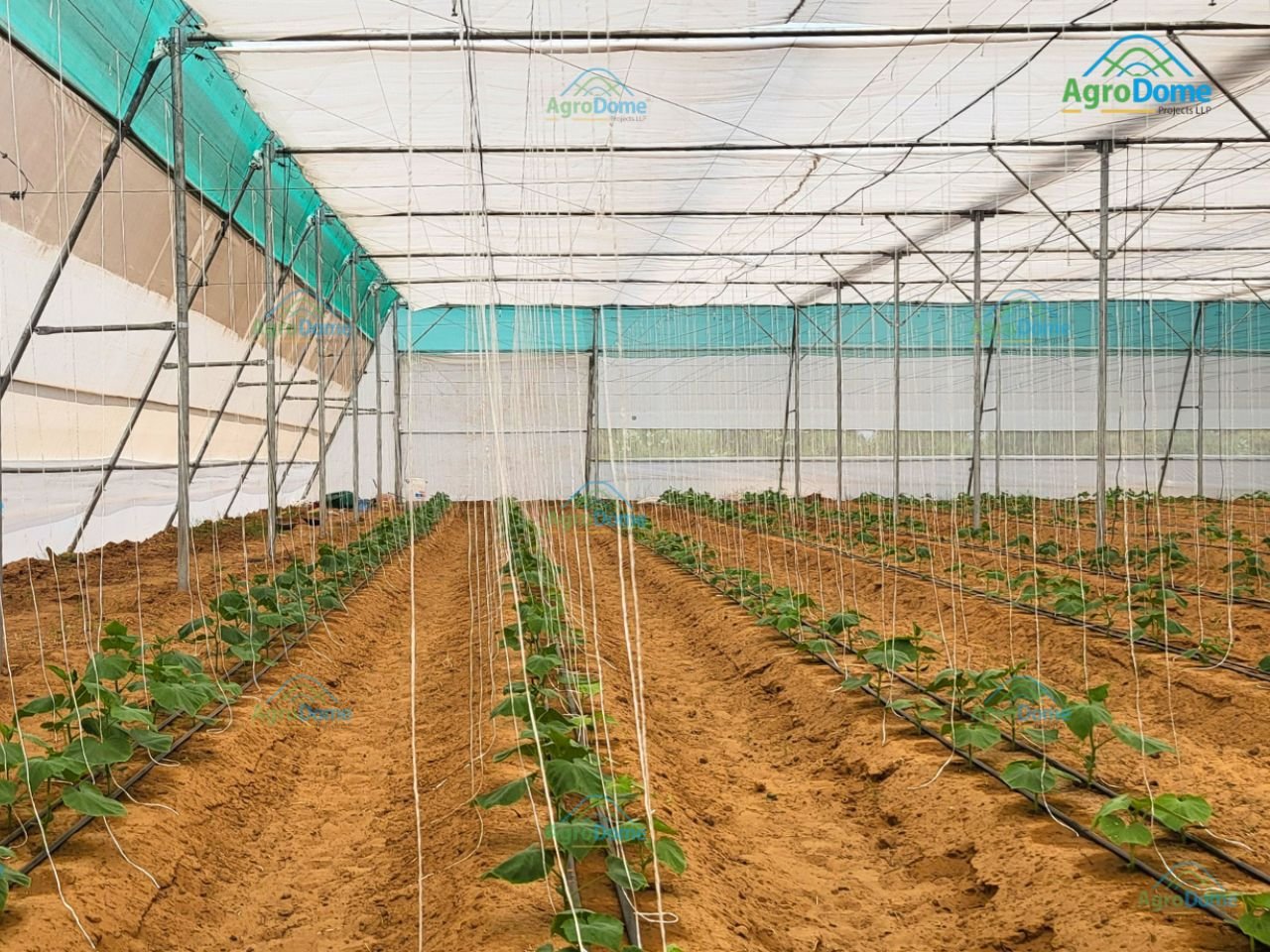
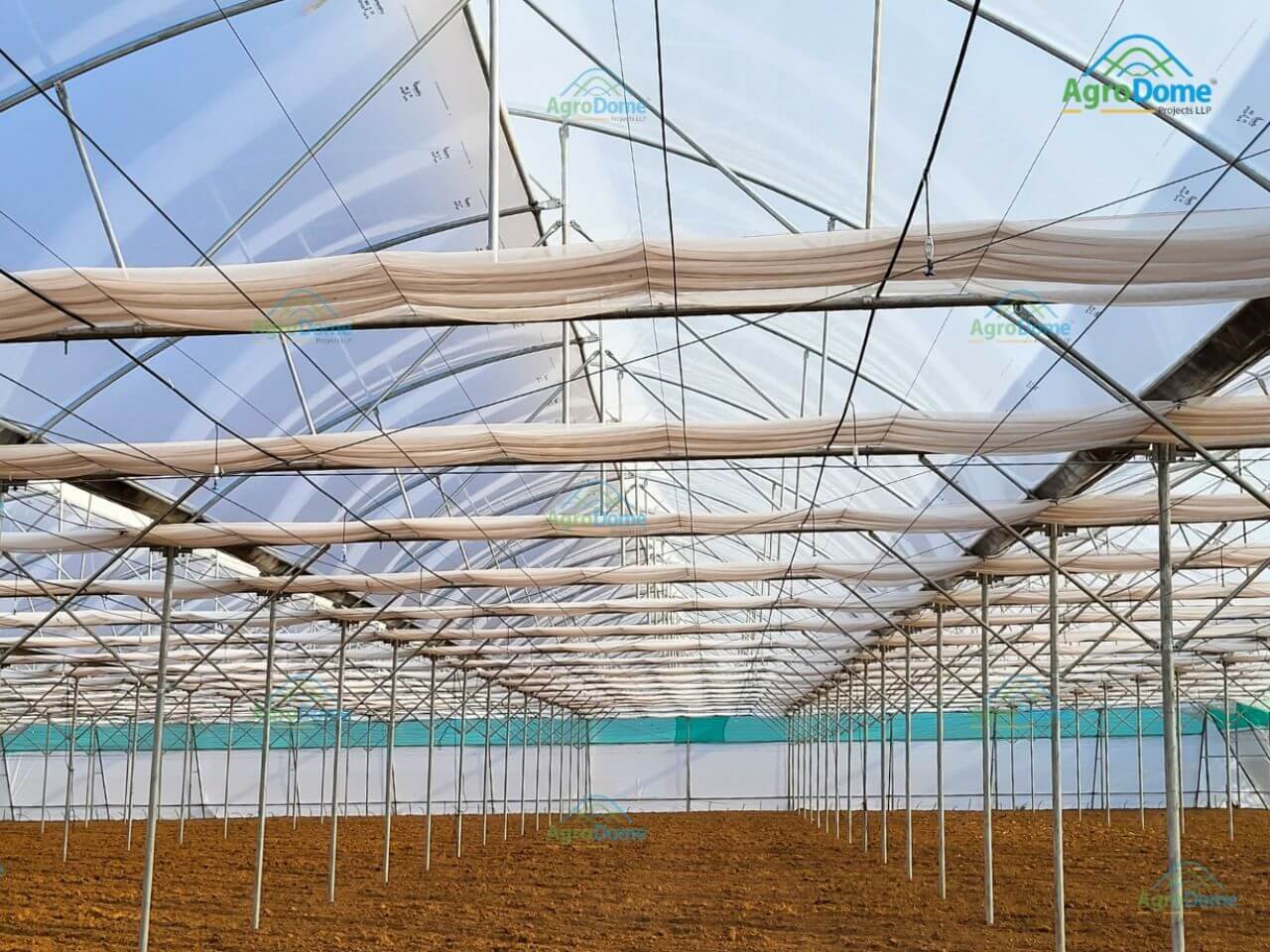
Bank of Baroda takes a broader approach with its “Financing Protected Cultivation Projects” scheme, which covers not just polyhouses but also shade net houses, plastic tunnels, anti-bird and anti-hail nets, plastic mulching, and even hydroponics, aquaponics, and aeroponics setups under one umbrella product.
Loan amount: need-based, with no stated ceiling
Margin/processing/inspection charges: nil for loan amounts up to ₹3 lakh — a genuinely useful perk for very small setups
Interest rate: tiered by loan size — roughly MCLR + spread for smaller loans, rising to MCLR + spread + 2.10–2.15% for loans of ₹25 lakh and above with 3–9 year tenure
Security: up to ₹1.60 lakh, only hypothecation of the crop and structure is needed; above that, mortgage of the asset and possibly land, plus a third-party guarantee, may be required
Repayment tenure: 3 to 9 years, depending on the activity and cash flow
Moratorium: 3 to 12 months, based on the project’s cash flow
Eligibility: individual farmers, SHGs/JLGs, tenant farmers, oral lessees and sharecroppers, FPOs/FPCs, and even corporate or partnership entities engaged in agriculture
The standout detail here is how inclusive the eligibility list is — tenant farmers, oral lessees, and sharecroppers are explicitly named, which is unusually accommodating compared to schemes that require full land ownership. If you’re farming on leased or informally-held land, this is worth a closer look.
Side-by-Side Comparison
| Factor | SBI Poly Loan | Bank of Baroda |
|---|---|---|
| Loan ceiling | ₹5 crore | No stated ceiling (need-based) |
| Margin money | 15% of project cost | Nil for loans up to ₹3 lakh; varies above that |
| Collateral-free threshold | Up to ₹1.60 lakh | Up to ₹1.60 lakh |
| Max repayment tenure | 72 months (6 years) | Up to 9 years |
| Moratorium | Up to 12 months | 3 to 12 months |
| Scope of structures covered | Polyhouse specific | Polyhouse, shade net, tunnels, hydroponics, aquaponics, aeroponics |
| Tenant/leased land farmers | Not explicitly mentioned | Explicitly eligible (tenants, oral lessees, sharecroppers) |
Which One Fits Your Situation
If your project is a straightforward, mid-to-large polyhouse and you own your land outright, SBI’s Poly Loan is a clean, purpose-built option with a lower margin requirement than most farmers expect. If you’re working on leased land, running a smaller structure under ₹3 lakh, or exploring something beyond a standard polyhouse — shade net, tunnels, or even hydroponics — Bank of Baroda’s broader scheme and nil charges at the small end make it worth a serious look.
Either way, don’t assume the numbers we’ve listed here will still be exact by the time you apply — MCLR rates move, and banks revise scheme terms periodically. Treat this as a starting point for your branch conversation, not the final word.
Frequently Asked Questions
Is SBI’s 15% margin lower than what most banks charge?
It’s on the lower end compared to the 25% figure commonly cited as an industry norm, which makes SBI’s scheme worth checking if minimizing your upfront cash outlay is a priority.
Can I get a polyhouse loan without owning the land?
Bank of Baroda’s scheme explicitly includes tenant farmers, oral lessees, and sharecroppers as eligible applicants. Check with your specific SBI branch, as eligibility details can vary by circumstance even within one bank’s stated scheme.
Does either scheme cover shade net houses or only polyhouses?
SBI’s scheme as listed is specific to polyhouses. Bank of Baroda’s scheme is broader and explicitly covers shade net houses, plastic tunnels, and several other protected cultivation structures under one product.
Are these interest rates fixed?
No — both banks price these loans off their MCLR (Marginal Cost of Funds based Lending Rate) plus a spread, so the effective rate moves whenever MCLR is revised. Always ask for the current effective rate at the time of application.
Terms summarised here are based on SBI’s and Bank of Baroda’s own published scheme pages as of 2026 and are subject to change without notice. Please confirm current rates, margin requirements, and eligibility directly with your branch before applying.
Need help preparing your loan file for either bank?
AgroDome can help you put together vendor quotations and a project report structured to match what your chosen bank is looking for.
Get a Free Consultation