
Why Now Might Still Be the Right Time to Start Protected Cultivation
The subsidy landscape just shifted. Here’s a grounded, numbers-first case for why that doesn’t change the fundamentals as much as it might seem to.
If you’ve been following the news, you’ll know NHB recently revised its assistance for protected cultivation projects, and the headlines around it haven’t been encouraging. We’re not going to pretend that didn’t happen or talk around it. But we also don’t think it changes the underlying case for starting a polyhouse project as much as the reaction online might suggest. Here’s the honest, numbers-based version of why.
First, Let’s Be Precise About What Actually Changed
NHB revised its Commercial Horticulture and Cold Storage Scheme guidelines in August 2026, reducing assistance for protected cultivation projects in General Areas from 50% to 35%. This is a genuine cut, and farmers and greenhouse manufacturers have protested it, with industry bodies formally asking the government to reconsider.
But here’s the detail that matters most for most of the people reading this: the NHB route applies to larger commercial projects, generally 2,500 sqm and above. If you’re a first-time farmer planning a standard 1-acre (roughly 4,000 sqm) or smaller polyhouse, you’re more likely applying through the NHM route through your District Horticulture Officer, which has historically run on a separate track from NHB. We’d encourage you to confirm current rates for your specific route and state directly with your DHO, since this is a developing situation — but the point stands that “subsidy got cut” as a blanket headline oversimplifies who it actually affects.
If You Are Affected: What the Numbers Actually Look Like
For anyone pursuing a larger commercial project through the NHB route, let’s not soften this — a drop from 50% to 35% is a real, material change to your financing structure. On an illustrative ₹2 crore eligible project, assistance drops from ₹1 crore to roughly ₹70 lakh, meaning you’d need to arrange an additional ₹30 lakh yourself or through your loan. That’s a genuine recalculation, not a rounding error.
What this means practically: your margin money requirement goes up, your loan amount likely increases, and your break-even timeline extends somewhat. It doesn’t mean the project stops making sense — it means the math needs to be redone honestly before you commit, rather than planning around the old 50% figure out of habit.
What Hasn’t Changed: The Rest of the Support Stack
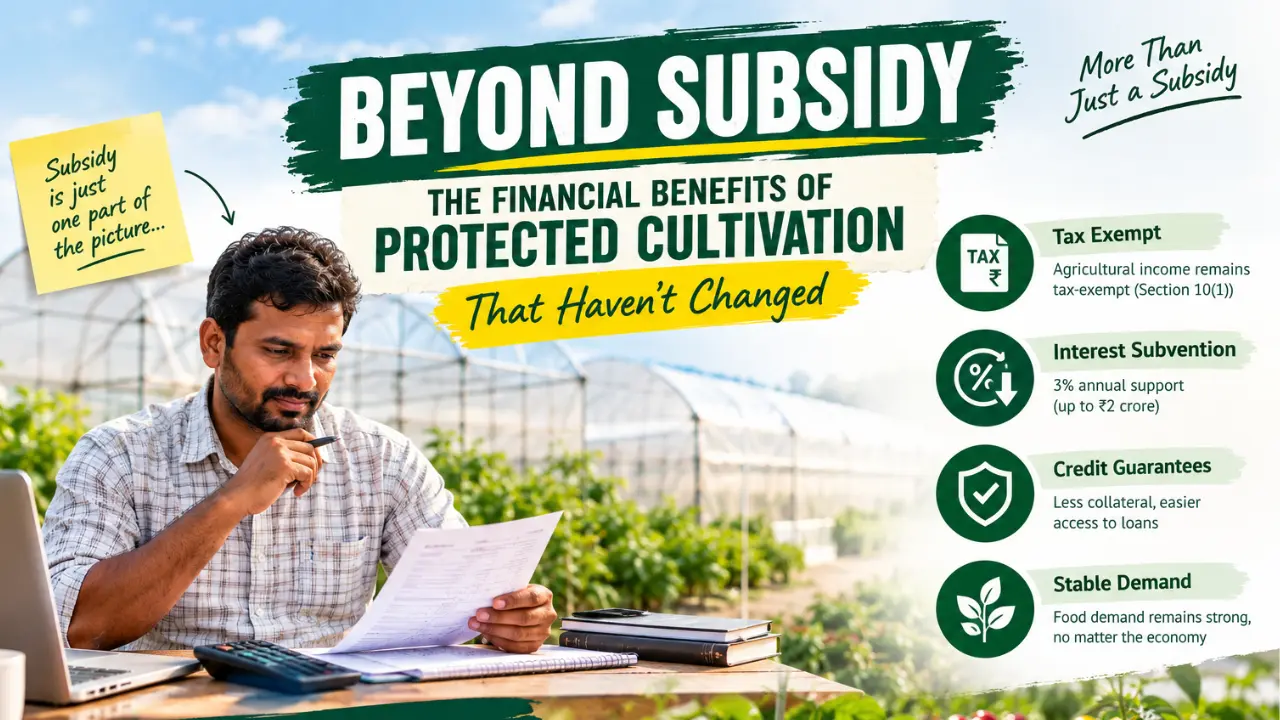
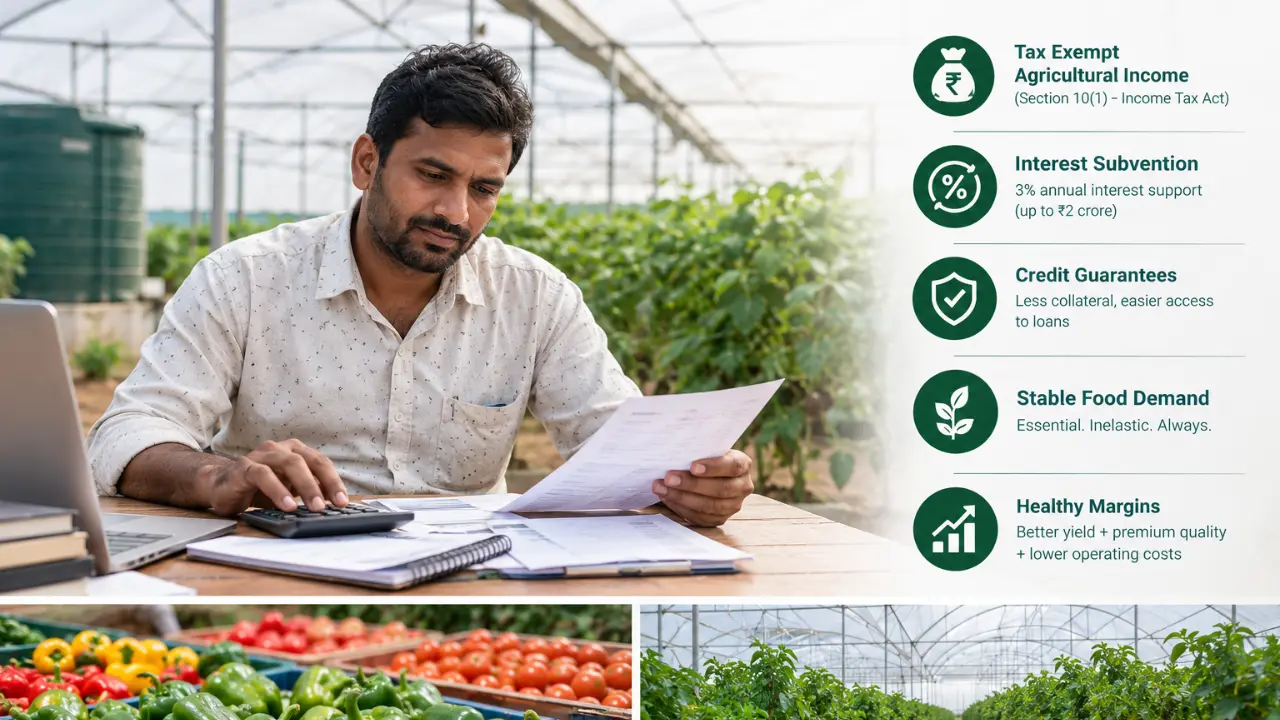
This subsidy revision affects one specific lever in a much larger support structure, and the rest of it remains intact. Tax-exempt agricultural income under Section 10(1) hasn’t changed. Interest subvention under AIF, which cuts roughly 3% off your effective loan interest rate, hasn’t changed. Credit guarantee mechanisms that reduce collateral requirements haven’t changed. None of these depend on the NHB capital subsidy rate — they’re separate pillars of support that continue regardless of this particular revision.
The Fundamentals That Were Never About the Subsidy Rate
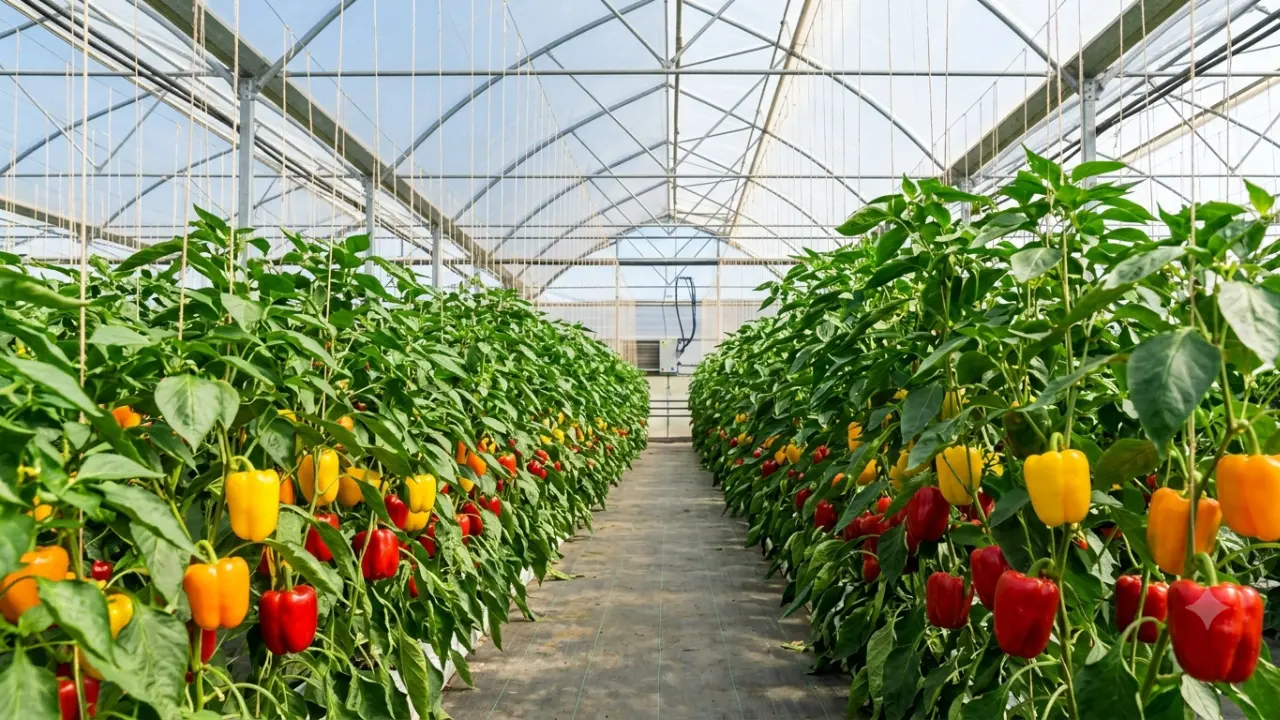
It’s worth stepping back here. A subsidy lowers your entry cost — it was never the reason protected cultivation makes business sense in the first place. The structurally stable demand behind food consumption hasn’t shifted because of a policy letter. The quality and yield advantages of growing in a controlled environment versus open field haven’t changed. The margin structure on a well-managed capsicum or cucumber crop, driven by consistent quality and year-round production, is unaffected by this revision.
A lower subsidy means a higher entry cost and a somewhat longer break-even period — it’s a real headwind, and we’re not minimising it. But it doesn’t touch the reasons the business works once it’s running.
This Policy Fight Isn’t Over
Worth knowing: industry bodies and farmer groups are actively pushing back on this revision through formal representations, asking the government to reconsider the reduction and to provide clear transitional arrangements for projects already in progress under the earlier guidelines. Policy on subsidy rates has moved before and can move again — this isn’t necessarily a permanent ceiling, and it’s reasonable to factor that uncertainty into your timing decision rather than treating 35% as a fixed, final number for the NHB route going forward.
So, Should You Start Now?
Our honest answer depends on which route applies to you. If you’re a small or first-time farmer likely applying through NHM, this particular revision probably doesn’t change your math much — it’s worth confirming current rates with your DHO, but there’s no strong reason tied to this news specifically to delay. If you’re planning a larger commercial project through the NHB route, it’s worth doing a fresh, honest recalculation of your numbers at 35% before committing, and deciding whether the economics still work for you at that level — for many well-chosen crops and markets, they still will, just with a longer runway to break-even than before.
What we wouldn’t recommend either way: waiting indefinitely for a policy reversal that may or may not come, while doing nothing. If the fundamentals of your specific project — land, water, crop, market access — are sound, the subsidy rate is one input into the decision, not the entire decision itself.
Frequently Asked Questions
Does the NHB subsidy cut affect NHM subsidy for small farmers too?
Based on current information, the revision specifically targets the NHB route for larger commercial projects. NHM, the route most small and first-time farmers use through their DHO, appears to remain on its existing terms — but please confirm current rates directly with your DHO, since this situation is still developing.
If I already started a project under the old 50% guideline, am I affected?
This is exactly the kind of transitional question industry bodies are formally raising with the government right now. Check directly with NHB or your bank on how existing in-progress applications are being treated under the revised guidelines.
Is it worth waiting to see if the subsidy rate gets restored?
There’s no way to predict this with certainty. If your project’s fundamentals are strong at 35%, we’d generally lean toward not waiting indefinitely on a policy reversal that may or may not happen. If the numbers only work at 50%, it may be worth waiting and monitoring, or reconsidering the project’s scale.
What should I do first if I’m still considering starting a project?
Get an updated, accurate cost estimate reflecting current subsidy terms for your specific route and location before making any commitment — don’t plan around outdated figures from before August 2026.
This article reflects the NHB subsidy guideline revision as publicly reported in August 2026. Subsidy terms, rates, and eligibility conditions are subject to change and may differ by state and scheme. Please confirm current terms with NHB, your District Horticulture Officer, and your bank before making any investment decision. This is not financial advice.
Want an honest, up-to-date number for your specific project?
AgroDome can walk you through current subsidy terms for your route and location, and give you a realistic cost and return estimate before you commit.
Get a Free Consultation