
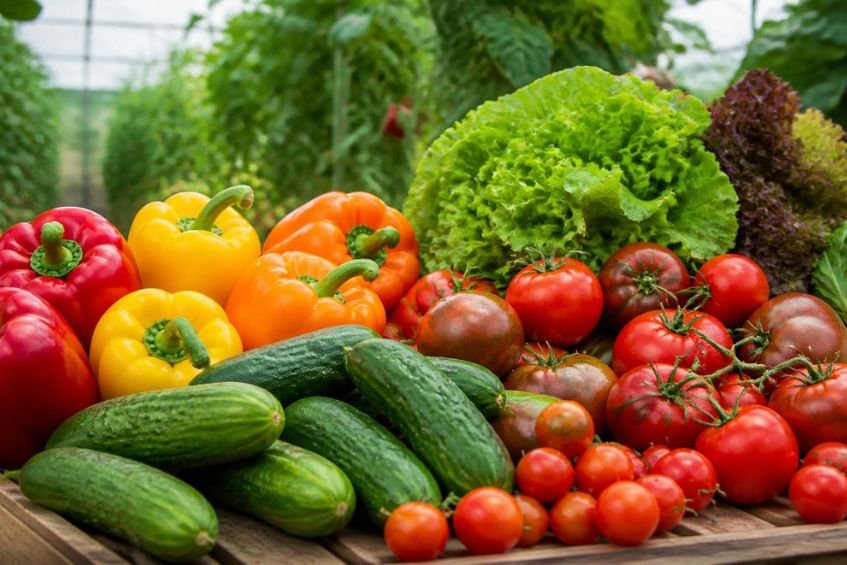
Not a “top 28 crops” list. Just what actually holds up against Gujarat’s heat and water — and what quietly struggles here even though it does fine elsewhere.
We could give you a list of 25 crops that grow in a polyhouse somewhere in India. That’s not particularly useful if you’re farming in Gandhinagar or Mehsana, because half of that list will underperform the moment Gujarat’s May heat and local groundwater get involved. So instead, let’s talk about what actually holds up here, and just as importantly, what doesn’t — regardless of what a generic blog post says.
Why Gujarat Needs a Different Playbook
A standard naturally ventilated polyhouse (NVPH) — the kind that works beautifully in cooler hill regions — turns into an oven in North Gujarat by April and May. Without proper cooling measures, structures here can easily exceed the temperature range most vegetable crops tolerate, causing flower drop and poor fruit set right when you need the harvest most. This isn’t a reason to avoid protected cultivation — it just means your structure and crop choice need to be planned together, not separately.
There’s a second, less talked-about issue specific to this state: water quality. Groundwater across large parts of Gujarat, especially in coastal Saurashtra and parts of central Gujarat, tends to run high in salinity and sodium content, which can damage sensitive crops over time even when everything else about your setup is right. We’ll come back to this — it changes which crops actually make sense for your specific plot.
Crops That Genuinely Perform Well in Gujarat
Coloured Capsicum — still the safest starting point
This remains our default recommendation for a reason. Capsicum handles Gujarat’s climate reasonably well as long as you keep night temperatures from 18°C and day temperatures from crossing roughly 30–32°C for extended stretches — beyond that, flowers start dropping. Varieties like Bachata (yellow) and Indra (green) are widely grown and well-suited to standard NVPH structures here, provided you add a thermal/shade screen for the peak summer months rather than relying on natural ventilation alone.
Cucumber — with one important caveat
Cucumber does well here too, but the trick in Gujarat is timing your cycles around the worst heat rather than fighting through it. Short-duration cycles of around 90 days let you harvest and clear the crop before peak May heat sets in, then restart once temperatures ease — this is a much smarter approach than trying to push a cucumber crop straight through the hottest months.
Tomato — needs height, not just heat tolerance
Indeterminate hybrid tomato varieties do well in Gujarat, but only if your structure has enough gutter height — around 4 to 4.5 metres is ideal. The extra height creates an air buffer above the canopy that keeps plants meaningfully cooler, which matters far more here than in milder climates where a shorter structure would be fine.
Leafy greens and herbs — better suited to shade net than full polyhouse
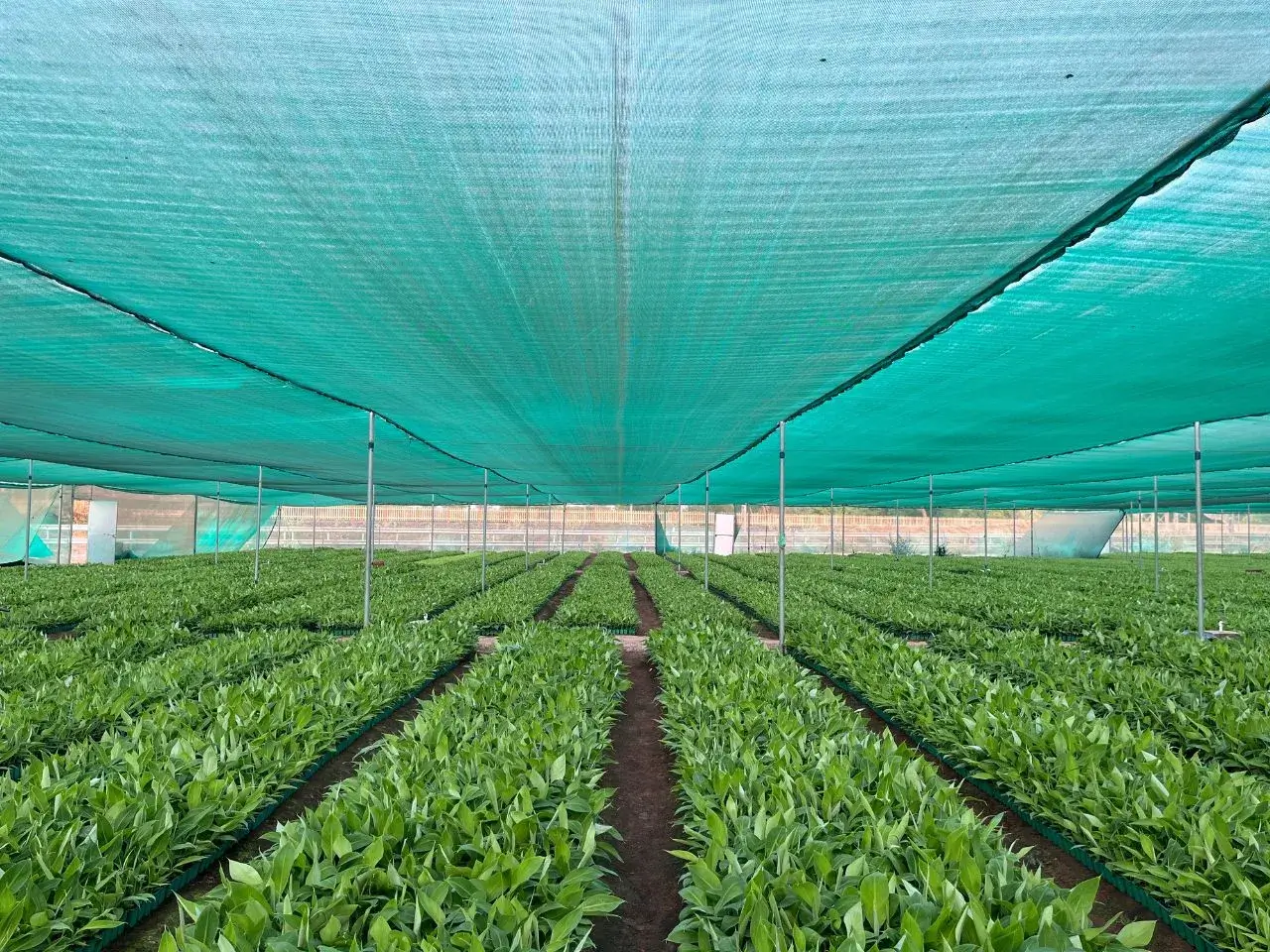
Spinach, coriander, methi, and herbs like basil and mint often do better in a shade net house than a sealed polyhouse in Gujarat’s climate. The reduced sunlight intensity keeps leaf quality high and cuts heat stress, and the lower structure cost makes this a sensible entry point if you’re testing protected cultivation on a smaller budget before committing to a full NVPH.
The Water Quality Check Almost Nobody Does First
Here’s something we genuinely wish more farmers checked before finalising their crop plan. Groundwater quality varies dramatically across Gujarat — studies of coastal Saurashtra and parts of central Gujarat have found a large share of groundwater samples unsuitable for irrigation due to high salinity and sodium content, largely from natural salt dissolution and evaporation effects in these regions. If your borewell water falls into that category, sensitive crops like capsicum and strawberries can suffer slow, hard-to-diagnose damage — yellowing, stunted growth, poor fruit set — that often gets blamed on pests or nutrition when the real cause is water chemistry.
Electrical Conductivity (EC) — ideally under 1.0 dS/m for sensitive crops like capsicum and strawberry
Sodium Adsorption Ratio (SAR) — high SAR water degrades soil structure over time even if the crop initially looks fine
Chloride and bicarbonate levels — elevated levels can cause leaf-tip burn and chlorosis-like symptoms in sensitive crops
If your water tests poorly, you have two realistic paths: invest in an RO/water treatment unit before starting a sensitive crop, or choose a crop that’s more tolerant of moderate salinity — cucumber and some tomato varieties handle it noticeably better than capsicum or strawberries do.

Crops We’d Approach Carefully in Gujarat
A few crops that do genuinely well in cooler or more humid parts of India need extra caution here:
| Crop | Why it needs extra care in Gujarat |
|---|---|
| Strawberry | Highly sensitive to both heat stress and salty water — needs a cooled structure and clean water source to succeed |
| Roses / cut flowers | Vulnerable to heat-related quality loss and typically need Fan & Pad cooling in this climate, raising upfront cost |
| Blueberry | Needs low-chill varieties and careful soil pH management (blueberries prefer acidic soil, uncommon naturally in Gujarat) — very doable, but not a “plant and forget” crop |
None of these are off the table — we’ve helped set up successful projects with all three — but they require deliberate structure design and water treatment planning from day one, not an afterthought once the crop is already struggling.
Our Honest Recommendation for First-Timers
If this is your first protected cultivation project in Gujarat, start with coloured capsicum or a cucumber-capsicum combination in a properly shaded NVPH with a thermal screen. Get your water tested before you finalise the crop, not after you notice a problem. And if your budget is tight, a shade net house with leafy greens is a genuinely smart way to learn the ropes of protected cultivation before scaling into a full polyhouse investment.
Frequently Asked Questions
Do I really need a Fan & Pad system in Gujarat, or is NVPH enough?
For hardier crops like cucumber and capsicum, a well-designed NVPH with a thermal/shade screen and foggers is usually sufficient. For heat-sensitive crops like strawberries or roses, Fan & Pad cooling makes a meaningful difference to consistency and quality.
How do I know if my borewell water is a problem?
Get a water sample tested at a local agricultural university lab or a certified soil-water testing center for EC, SAR, and chloride levels before finalising your crop. This is a small cost that can save a full season’s investment.
Which part of Gujarat has the biggest water quality concerns?
Coastal Saurashtra and parts of central Gujarat have shown higher rates of salinity-affected groundwater in regional studies, but quality varies significantly even within a district, so a local test matters more than assuming based on region.
Can I grow the same crop year-round in a Gujarat polyhouse?
Technically yes, but yield typically drops during the most extreme months — peak May heat especially — unless you’ve invested in advanced cooling. Many successful growers plan shorter crop cycles that avoid the worst weeks rather than pushing one crop straight through them.
Crop suitability depends on your specific location, water source, and structure design within Gujarat, and can vary even between nearby plots. This article offers general guidance — please get a site-specific assessment, including a water quality test, before finalising your crop plan.
Not sure which crop suits your specific plot?
AgroDome can assess your land, water source, and budget to recommend a crop and structure combination built for your local conditions.
Get a Free Consultation