
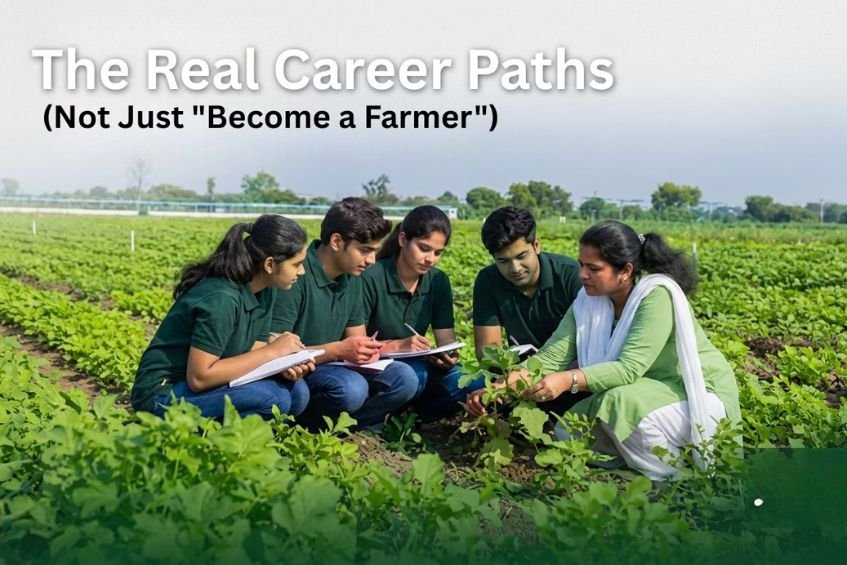
Not another “agriculture jobs are booming” post. Here’s what a real career inside protected cultivation actually looks like — roles, pay, and where the growth is coming from.
Most “career in agriculture” content talks about agritech startups, precision farming apps, or general farm jobs. Almost none of it zooms in on protected cultivation specifically — polyhouses, greenhouses, controlled environment agriculture — even though this is one of the fastest-growing corners of Indian agriculture right now. If you’re a student, an agriculture graduate, or someone considering a career shift, here’s an honest picture of what this field actually offers.
Why This Sector Is Genuinely Growing
India’s broader agriculture sector contributes a significant share of the country’s GDP and supports the livelihoods of hundreds of millions of people, but protected cultivation specifically is growing faster than traditional open-field farming. Government budget allocations toward agriculture have risen substantially in recent years, and horticulture-focused schemes continue to push more farmers toward polyhouses and greenhouses. On top of that, private investment in agritech has crossed billions of dollars over the past several years, with companies building technology, supply chains, and infrastructure specifically around high-value, controlled-environment crops. That combination — government push plus private investment — is exactly why the job market in this space keeps expanding.
The Real Career Paths (Not Just “Become a Farmer”)
Protected cultivation isn’t a single job — it’s an entire ecosystem of roles, most of which don’t require you to own or operate land yourself.
Agronomist / Crop Advisor
Agronomists guide crop selection, nutrition schedules, pest management, and yield optimisation for polyhouse and greenhouse operations. This role sits at the technical heart of the industry and is in consistent demand from both individual farmers and larger commercial operations.
Greenhouse Project Manager
These are the people who coordinate structure design, construction, irrigation systems, and installation timelines — essentially running a polyhouse project from planning through handover. It’s a role that blends technical knowledge with genuine project execution skills.
Climate Control / Automation Technician
As more polyhouses adopt sensors, automated irrigation, and climate monitoring systems, there’s growing demand for people who understand both the agricultural side and the technology that runs it — a genuinely newer role that barely existed a decade ago.
Farm Owner / Agripreneur
Running your own protected cultivation operation is still one of the most direct paths into this field, whether as a primary livelihood or a side investment alongside other income.
Sales, Marketing & Business Development in AgriTech
Companies manufacturing greenhouse structures, irrigation equipment, and crop protection products all need people who understand the agricultural context well enough to sell and support their products effectively.
What About Salary?
This varies quite a bit by role, experience, and whether you’re working with a government body, a private company, or running your own operation — so treat the ranges below as a general orientation rather than a promise.
| Role | Typical entry-level range | Experienced range |
|---|---|---|
| Field agronomist | ₹2.5–4 lakh/year | ₹6–12 lakh/year |
| Greenhouse project manager | ₹3.5–6 lakh/year | ₹10–18 lakh/year |
| Agritech field officer | ₹3–5 lakh/year | ₹8–15 lakh/year |
| Farm owner (own operation) | Highly variable — depends entirely on crop, scale, and market access | See our crop-specific profit guides for realistic ranges |
Roles at agritech startups and larger private companies tend to sit at the higher end of these ranges, especially where the job combines technical agriculture knowledge with data, sales, or operations skills — that combination is currently in short supply relative to demand.
Where the Real Growth Is Headed
A few genuine trends are shaping where this career path goes over the next several years:
Technology integration. Sensors, IoT-based climate monitoring, and automated irrigation are steadily becoming standard rather than optional in commercial-scale protected cultivation, which is creating demand for people comfortable at the intersection of agriculture and technology.
High-value and export-oriented crops. As more growers move into crops like blueberries, exotic vegetables, and export-grade produce, the need for specialised agronomic and quality-control expertise grows alongside it.
Corporate and institutional entry into agriculture. Larger companies are increasingly investing directly in protected cultivation infrastructure and supply chains, creating structured, salaried roles that didn’t really exist in this space a decade ago — a shift from a purely farmer-led industry toward one with real corporate career ladders too.
Is It Actually a Good Career Choice?
Honestly — yes, if you go in with realistic expectations. This isn’t a field where you’ll get rich overnight in a salaried role, but it offers genuine, growing demand, increasingly diverse job types beyond “working on a farm,” and a sector that’s clearly being taken seriously by both government policy and private capital. If you enjoy being close to agriculture but want more variety than traditional farming offers, roles spanning agronomy, project execution, and agritech at a company like AgroDome give you exposure to the technical, commercial, and on-ground sides of the industry all at once.
Frequently Asked Questions
What qualifications do I need for a career in protected cultivation?
A B.Sc. in Agriculture or Horticulture is the most common entry point for agronomy-focused roles, though project management and business development roles often welcome candidates from engineering, management, or other backgrounds with a genuine interest in agriculture.
Do I need to come from a farming background to work in this field?
Not at all. Many roles — project management, sales, agritech operations — are open to people without a farming background, as long as they’re willing to build genuine on-ground understanding of the crops and systems involved.
Is government or private sector better for a career in this field?
Government roles (horticulture departments, extension services) tend to offer more stability and slower-paced growth, while private companies and agritech startups typically offer faster growth and higher pay ceilings, but with more variability and risk.
How do I get started if I’m interested in this field right now?
Look at internships or entry-level roles with greenhouse manufacturers, agritech companies, or horticulture departments to build hands-on exposure — theoretical knowledge alone doesn’t carry as much weight in this industry as practical, field-level experience does.
Salary figures and industry trends in this article are indicative estimates for 2026 based on general industry patterns and will vary by company, location, and individual experience. Please research specific employers and roles for the most accurate current figures.
Interested in building a career in protected cultivation?
Check out current openings at AgroDome — we’re always looking for people passionate about the future of Indian agriculture.
View Careers at AgroDome