
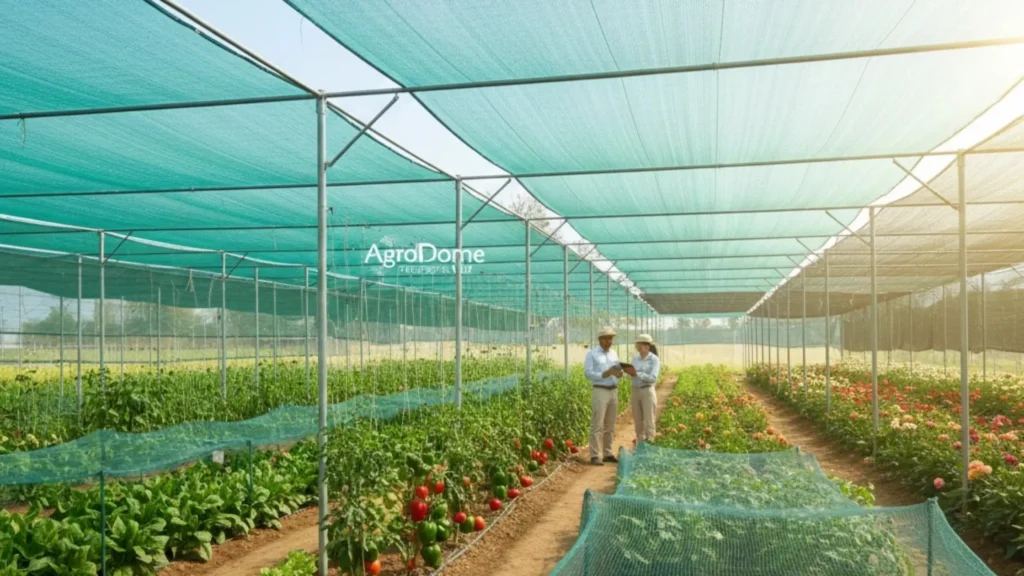
Shade net houses have become an essential part of modern protected cultivation, especially in regions where high sunlight intensity, heat stress, and unpredictable weather affect crop growth. One of the most important decisions while designing a shade net house is selecting the right shade net percentage. The shade percentage directly influences light penetration, temperature regulation, plant physiology, and ultimately crop yield and quality. Choosing the wrong shade level can lead to poor growth, delayed flowering, or reduced productivity.
In this blog, we explain how shade net percentages work and which crops perform best under different shade conditions.
Understanding Shade Net Percentage
Shade net percentage refers to the amount of sunlight blocked by the net. For example, a 50% shade net allows about half of the natural sunlight to pass through, while the remaining light is diffused or blocked. Shade nets not only reduce light intensity but also help lower temperature, protect crops from wind and birds, and create a more stable microclimate inside the structure.
Different crops have different light requirements. While some crops thrive under partial shade, others require high light intensity for proper growth, flowering, and fruit development. Therefore, selecting the correct shade percentage is critical for successful cultivation.

Best Shade Net Percentage for Vegetables
Vegetable crops generally require moderate sunlight, but excessive heat and radiation can cause stress, leaf burn, and reduced fruit set. For crops like tomato, capsicum, cucumber, chilli, brinjal, and leafy vegetables, a 35% to 50% shade net is usually ideal. This range allows sufficient light for photosynthesis while reducing heat stress, especially during summer months.
Leafy vegetables such as spinach, coriander, lettuce, and fenugreek perform particularly well under 50% shade, as it helps maintain tender leaves and prevents bolting caused by excessive heat.
Shade Net Requirements for Fruit Crops
Fruit crops grown under protected cultivation often need balanced light conditions. Crops like strawberry, papaya nurseries, banana nurseries, and berry plants typically grow well under 35% to 50% shade nets. This level of shading protects young plants from direct sunlight and heat while allowing enough light for healthy growth.
For fruit nurseries and saplings, shade nets also reduce moisture loss and improve survival rates during early growth stages.

Ideal Shade Net Percentage for Flowers and Ornamentals
Floriculture is one of the biggest beneficiaries of shade net cultivation. Flower crops such as gerbera, rose, anthurium, orchids, chrysanthemum, and carnations have specific light sensitivity. Most flowering plants perform best under 50% to 75% shade nets, depending on the crop and climate.
Ornamental foliage plants, indoor plants, and shade-loving ornamentals often require 75% shade, as excessive sunlight can damage leaves and affect visual quality. Proper shading helps maintain vibrant colors, longer shelf life, and uniform plant growth.
Shade Net Selection for Nurseries and Tissue Culture Plants
Plant nurseries, especially those dealing with tissue culture plants, grafted saplings, and young seedlings, require high protection. These plants are sensitive to direct sunlight and temperature fluctuations. A 50% to 75% shade net is commonly used for nurseries to create a gentle, diffused light environment that promotes root development and reduces transplant shock.
In many commercial nurseries, a combination of shade nets is used, allowing flexibility based on plant growth stages.
Shade Net Percentage for Medicinal and Aromatic Plants
Medicinal and aromatic plants such as aloe vera, tulsi, ashwagandha, mint, and lemongrass generally prefer moderate sunlight. A 35% to 50% shade net works well for these crops, especially in hot and dry regions. Controlled shading helps maintain essential oil content and improves overall plant health.

Factors That Influence Shade Net Selection
While crop type is the primary factor, several other elements influence shade net selection. Local climate, temperature levels, altitude, season, and crop growth stage all play an important role. For example, in extremely hot regions, farmers may choose a higher shade percentage during summer and reduce it during winter. Similarly, young plants may need more shade initially, which can be reduced as the plants mature.
Net color also matters. Green shade nets are commonly used, while white, black, or aluminet nets may be selected for specific climatic or light-diffusion needs.
Conclusion
Selecting the correct shade net percentage is not a one-size-fits-all decision. It requires an understanding of crop light requirements, local climate conditions, and cultivation objectives. The right shade net creates an optimal microclimate, reduces crop stress, improves yield quality, and enhances profitability.
At AgroDome Projects LLP, we design and customize shade net house structures based on crop type, region, and farmer requirements, ensuring long-term performance and sustainable cultivation success.