
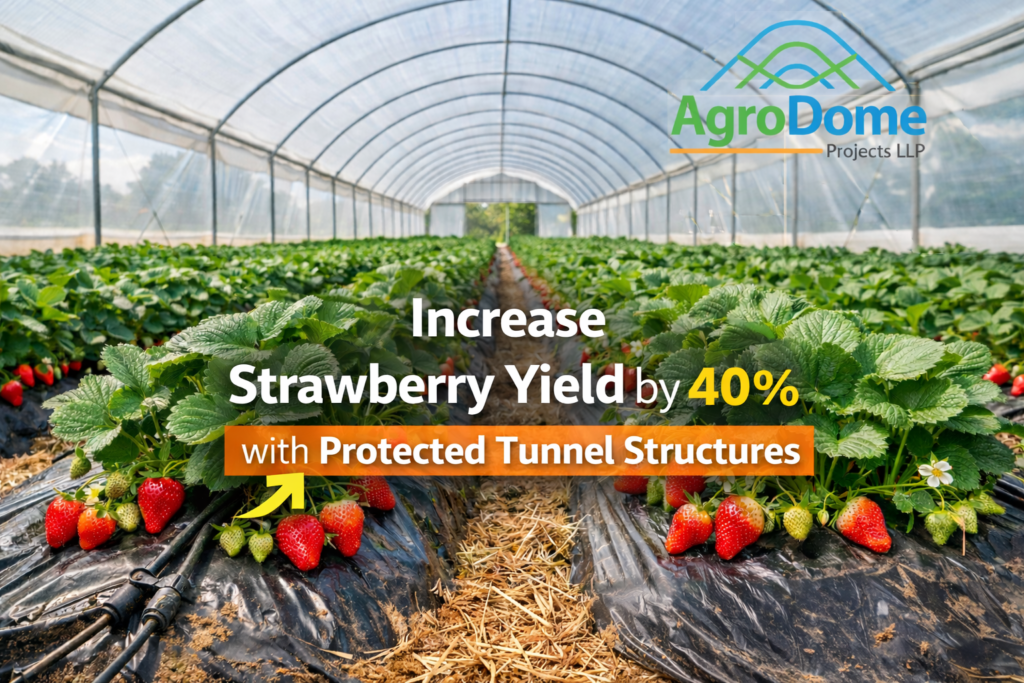
Protected tunnel for Strawberries; If you’re a small-scale farmer, a hobby horticulturist, or simply passionate about strawberries, you’ve likely asked: How can I squeeze more yield from the same patch? The answer may lie in protected tunnel structures—high tunnels and polytunnels—that transform how, when, and how much you harvest. At Agrodome, we specialise in tunnel solutions that help growers unlock strawberry yield improvement through controlled environments, smarter planning, and practical, field-tested practices.
In this post, we’ll explore how protected tunnels for strawberries drive higher yields, protect plants from weather and pests, extend the growing season, and boost overall farm profitability. We’ll share data, real-world examples, and actionable steps you can take to implement effective tunnel farming on your site.
Why protected tunnel structures matter for strawberries
Strawberries are wonderfully delicious but ecologically picky. They respond best when temperature, humidity, light, and moisture are carefully managed. Protected tunnel structures create a stable microclimate that:
- Moderates temperature swings and extends the growing season
- Improves air circulation and reduces disease pressure when managed correctly
- Enables precise irrigation and nutrient delivery
- Provides a physical barrier against wind, heavy rain, hail, and some pests
All these factors combine to increase berry size, sweetness, and, critically, yield. Many growers report improvements in both yield and fruit quality after adopting tunnel-based production.
The Strawberry Yield Improvement Secret: Controlled Growing Environments
Strawberries are notoriously sensitive to environmental conditions. Unpredictable weather, persistent pests, and rampant diseases can decimate your crop before you even get a chance to enjoy the sweet rewards. This is where protected tunnels shine.
Inside a high tunnel or polytunnel, you gain a more predictable growing window. Warmer soils in early spring let you transplant earlier, while careful shading or venting prevents overheating in mid-summer. The result is:
- Earlier fruit set and ripening
- Longer fruiting periods with fewer weather-induced gaps
- More opportunities for multiple harvest rounds per season
This continuity translates into a measurable rise in total production, often reaching the 40% benchmark when paired with good cultural practices.
These structures act as a shield, creating a controlled growing environment that nurtures your strawberry plants. By mitigating external factors, you’re essentially setting the stage for optimal growth and, consequently, a significantly higher strawberry yield.
Weather the Storm: Protection from Mother Nature’s Fury
One of the most significant advantages of protected tunnels is their ability to protect your plants from adverse weather conditions.
- Rain: Excessive rain can lead to fungal diseases and fruit rot. Tunnels keep the plants dry, reducing the risk of these issues and maintaining fruit quality.
- Frost and Freeze: Late frosts can devastate early-season blossoms. Tunnels provide a layer of insulation, protecting your precious buds from freezing temperatures.
- Hail: Hailstorms can shred foliage and damage developing fruits. Tunnels act as a physical barrier, safeguarding your plants from this destructive force.
- Wind: Strong winds can desiccate plants and damage delicate fruits. Tunnels create a calmer environment, reducing windburn and promoting even growth.
By minimising the impact of these weather-related stressors, your strawberry plants can focus their energy on producing more, bigger, and better berries.
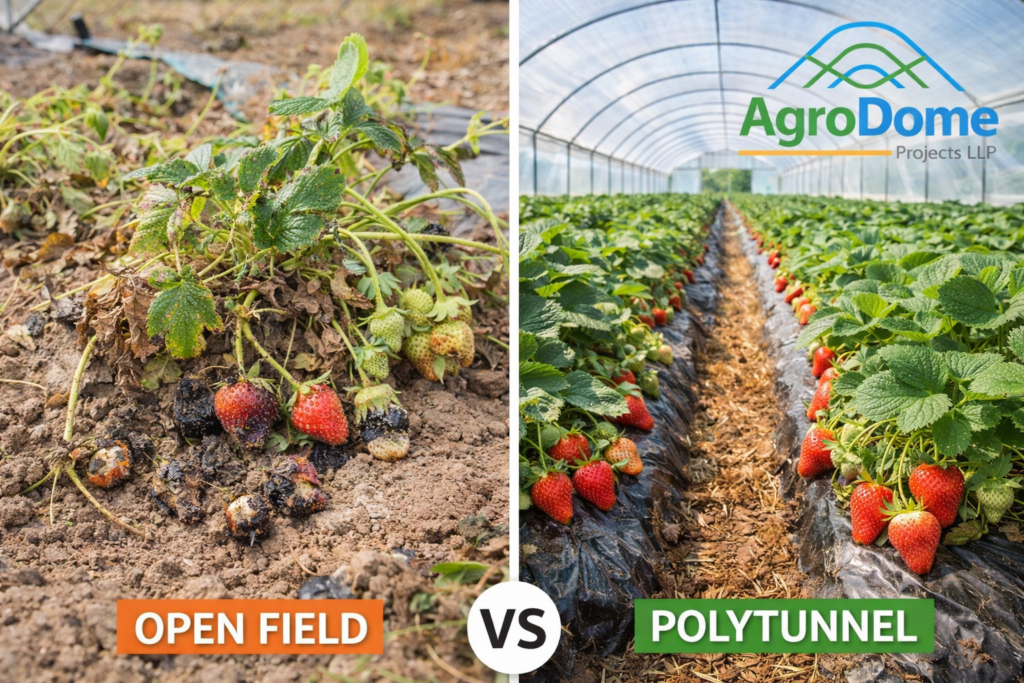
Yield Comparison: Open Field vs High Tunnel Farming
| Factor | Open Field | Protected Tunnel |
|---|---|---|
| Climate Control | Low | Moderate–High |
| Fruit Quality | Variable | Uniform |
| Disease Incidence | High | Low |
| Harvest Season | Limited | Extended |
| Yield Potential | Base | Up to +40% |
Pest and Disease Control: A Natural Approach to Higher Yields
Protected tunnels not only shield your plants from the elements but also create a barrier against pests and diseases. This is a game-changer for those seeking to reduce their reliance on chemical interventions.
- Reduced Pest Pressure: Tunnels limit access for many common strawberry pests, such as aphids, spider mites, and strawberry clippers.
- Disease Prevention: By controlling humidity and preventing excessive moisture on foliage, tunnels minimize the risk of fungal diseases like grey mould and powdery mildew.
- Spore management: Help manage spore loads by controlling leaf wetness and humidity
With fewer pest and disease problems, your plants can thrive without the need for heavy pesticide use, leading to healthier crops and a more sustainable farming operation.
Extend Your Harvest: Strawberry Cultivation Techniques for Year-Round Production
One of the most compelling benefits of protected tunnel structures is their ability to extend the growing season. This allows you to harvest strawberries earlier in the spring and later into the fall, giving you a significant edge in the market.
- Earlier Spring Harvests: Tunnels warm up the soil faster in the spring, allowing you to plant earlier and get a head start on the season.
- Later Fall Harvests: Tunnels trap heat and protect plants from early frosts, extending the harvest season well into the autumn months.
- Year-Round Production (in some climates): In milder climates, with the addition of supplemental heating and lighting, it’s even possible to achieve year-round strawberry production under tunnels.
Extending the growing season not only increases your overall strawberry yield but also allows you to capitalise on higher prices when fresh, locally grown strawberries are scarce.
Practical Insights and Best Practices: High Tunnel Farming for Success
Implementing protected tunnel structures requires careful planning and execution. Here are some practical insights and best practices to help you maximise your success:
- A. Choose the right structure for your operation: Choose the right type of tunnel structure for your needs and budget. High tunnels are taller and wider, providing more space for walking and working. Polytunnels are smaller and more affordable, making them a good option for smaller-scale operations.
- High tunnels: Taller, wider options that maximize working space and airflow. Great for small to mid-sized commercial operations.
- Polytunnels: More affordable and easier to install, ideal for beginners or tight budgets.
- Optional extras: Sidewall vents, roof vents, shade cloth, internal irrigation channels, and automation for climate control.
- Tip: Start with a structure that fits your climate, labour capacity, and budget. You can always upgrade later as you gain experience.
- B. Site selection and infrastructure: Select a site with good drainage, access to sunlight, and an adequate water supply.
- Location: Pick a site with good drainage, sun exposure, and easy access for daily management.
- Irrigation: Install a drip irrigation system to deliver water directly to the roots, reducing foliar disease risk and water waste.
- Power and automation: If you plan for climate control, consider thermoregulation, fans, and passive ventilation to maintain air quality.
- C. Soil to start: preparation and bed management: Prepare the soil thoroughly before planting, incorporating organic matter and ensuring proper drainage.
- Soil health: Conduct a soil test, amend with organic matter, and ensure good drainage.
- Bed design: Raised beds or flat beds with mulching help conserve moisture and reduce weed pressure.
- Planting density: Use spacing that encourages airflow, reduces disease risk, and accommodates your chosen cultivator.
- Variety Selection for Tunnels: Choose strawberry varieties that are well-suited to tunnel production and your local climate. Day-neutral varieties are often a good choice for extended-season production.
- Day-neutral or everbearing varieties often perform well under protected structures because they can produce fruit over a longer period.
- Local climate-adapted cultivators tend to yield consistently under tunnels, especially when paired with season-extending practices.
- Control Climate & Ventilation: Proper ventilation is crucial to prevent overheating and humidity buildup inside the tunnels. Install vents or roll-up sides to allow for adequate airflow.
- Ventilation: Install roof and sidewall vents or roll-up sides to prevent heat buildup and maintain humidity at healthy levels.
- Temperature targets: Work toward a daytime range that suits strawberries (roughly 18–24°C / 64–75°F), with cooler nights to encourage fruit set.
- Humidity management: Aim to keep leaf humidity moderate to prevent foliar diseases; shading or misting can help on hot days.
- Irrigation & Nutrition: Use drip irrigation to deliver water directly to the roots of the plants, minimizing water waste and reducing the risk of foliar diseases.
- Irrigation: Drip irrigation with a closed-loop system helps conserve water and keeps foliage drier, reducing disease pressure.
- Fertigation: Use a balanced nutrient plan tailored to strawberries and adjusted for protected environments.
- Monitoring: Regularly monitor soil EC, pH, and leaf tissue to maintain optimal nutrient status.
- Pollination Considerations: Ensure adequate pollination by introducing bees or other pollinators into the tunnels.
- In tunnels, pollination can be more challenging due to reduced natural pollinator presence. Consider introducing managed bees or using light mechanical agitation to improve fruit set.
- Pest management within tunnels:
- Scout frequently for pests like spider mites, thrips, and aphids.
- Use integrated pest management (IPM) practices, combining beneficial insects, careful use of miticides/insecticides, and cultural controls.
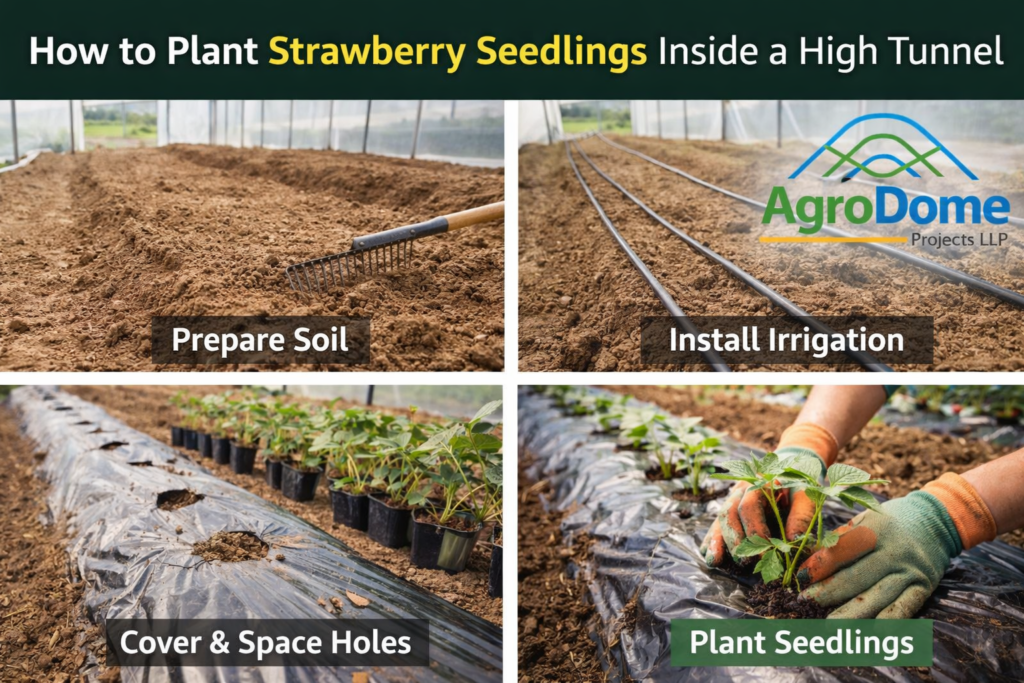
Step-by-step plan to start with tunnel farming for strawberries
- Assess your goal: target yield increase, season extension, or both.
- Budget and choose a structure type (high tunnel vs polytunnel) based on your land, climate, and labour.
- Secure site, drainage, and water access.
- Prepare soil and establish beds with appropriate organic matter and mulch strategies.
- Select suitable strawberry varieties for tunnel production.
- Install climate control features (ventilation, shade, and, if possible, basic automation).
- Install irrigation and fertigation systems; set up a monitoring routine.
- Plant and establish with careful spacing and protective measures against pests.
- Monitor microclimate, pests, and diseases; adjust ventilation and irrigation as needed.
- Harvest, record yields, and compare with a control plot to quantify strawberry yield improvement.
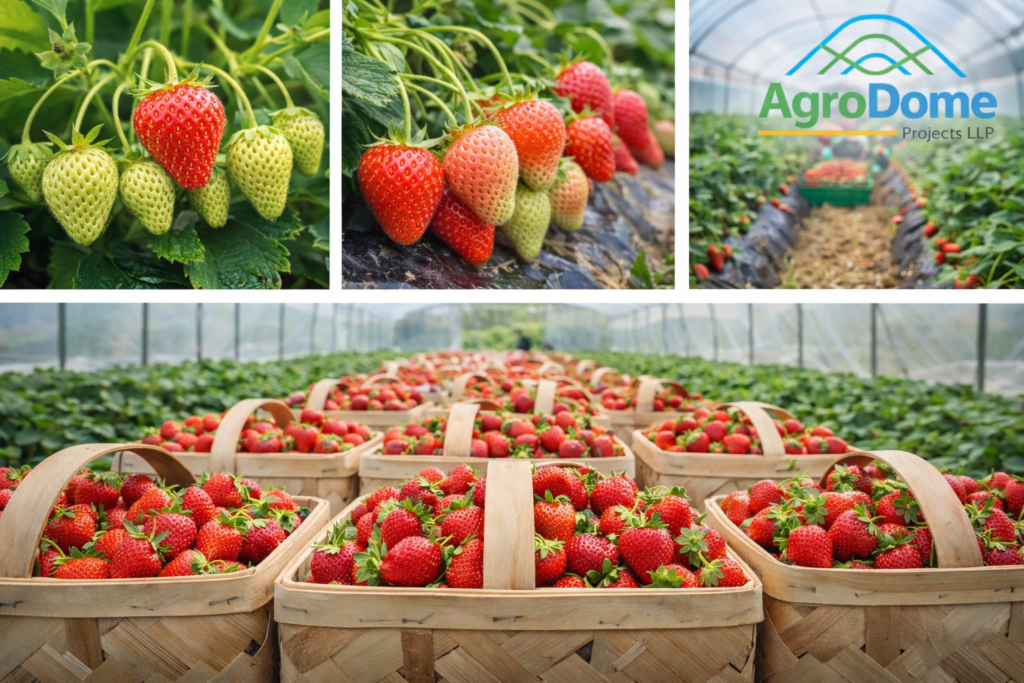
Real-world data and examples: The Proof is in the Pudding (or the Strawberry!)
Numerous studies and real-world examples demonstrate the effectiveness of protected tunnel structures in increasing strawberry yield.
- Studies and grower reports frequently show elevated yields under protected tunnels versus open-field production. In many cases, yield improvements of 30–40% have been observed when climate-controlled practices are paired with timely cultural interventions.
- Several farmers report improved berry size, uniformity, and marketable quality when using high tunnels to protect from weather extremes and to standardise harvest windows.
- When planning for tunnel farming, evaluate your local climate, available inputs, and labour. Adaptation is key; some regions see faster gains, while others require longer ramp-up times to realize full yield improvements.
Note: Results vary with climate, cultivar, management quality, and economics of your setup. Use pilot runs on small plots to calibrate your system before full-scale adoption.
Why AgroDome Protected Tunnels?
At AgroDome Projects LLP, our protected tunnel structures are designed to deliver real strawberry yield improvement under Indian farming conditions. We understand that successful berry cultivation requires more than just a structure — it requires smart engineering, durability, and complete technical support.
Built for Indian Agro-Climatic Conditions
Our protected tunnels for strawberries are engineered specifically for Indian agro-climatic zones. They help regulate temperature, reduce crop stress, and protect plants from unseasonal rains, strong winds, and excess sunlight.
Strong, Durable & UV-Stabilized
Designed with high wind resistance and UV-stabilized covering material, AgroDome tunnels ensure long-lasting performance and consistent crop protection across multiple growing seasons.
Customizable for Every Farm
Available from 1000 sq.m to 1 Acre+, our protected tunnel structures are suitable for strawberry, blueberry, and other berry crops, with crop-specific design options for maximum productivity.
Complete End-to-End Support
We provide:
✔ Structure planning
✔ Professional installation
✔ Agronomy guidance
✔ Crop-specific tunnel design
With AgroDome, you don’t just install a tunnel — you build a reliable system for higher yield, better fruit quality, and long-term profitability. 🍓🌱
Conclusion: Reap the Rewards of Protected Tunnel Structures
Protected tunnel structures offer a powerful and practical solution for increasing strawberry yield and improving overall crop quality. By creating a controlled growing environment, protecting plants from adverse weather, pests, and diseases, and extending the growing season, these structures can help you achieve a significant boost in productivity and profitability.
If you’re serious about maximizing your strawberry harvest, consider investing in protected tunnel structures. With careful planning, proper implementation, and a commitment to best practices, you can unlock the full potential of your strawberry plants and enjoy a bountiful harvest for years to come. So, embrace these strawberry cultivation techniques, and get ready to witness a remarkable transformation in your strawberry patch